Heroes & Monsters: Vikings Beyond Warriors

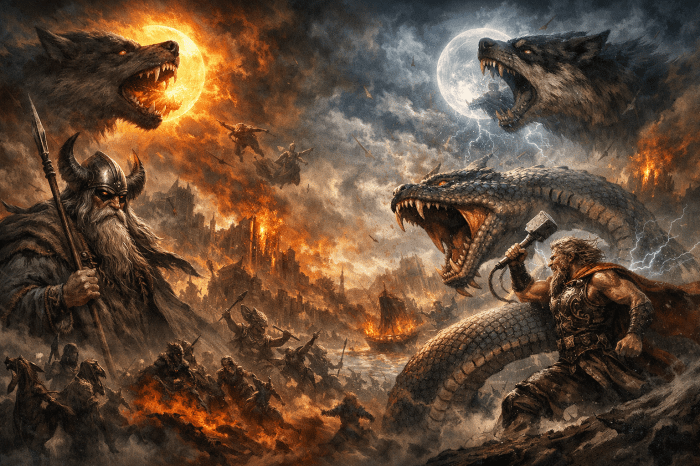
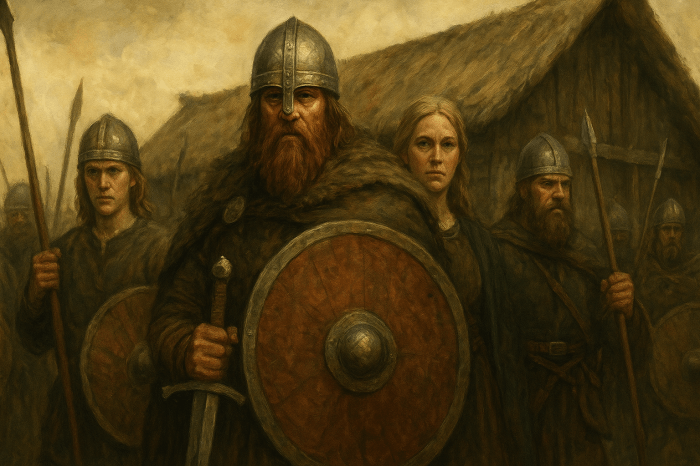
How Mythic Beasts and Archetypes Reflect Viking Psychology D.W. Roach When most people hear the word Viking, they picture a warrior — axe raised, shield locked, prow cutting through cold surf. But the Viking mind was not shaped by battle alone. It was shaped by monsters. In the Norse worldview, the wild was not empty. … Continue reading Heroes & Monsters: Vikings Beyond Warriors
Ragnarök and Its Many Meanings

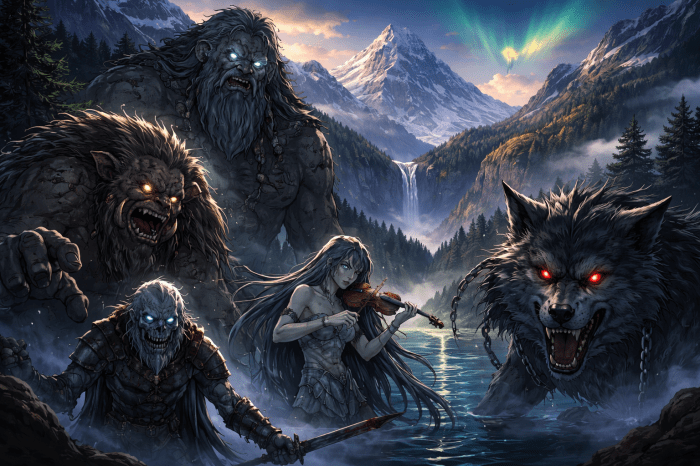
Not just an apocalyptic battle — cultural symbolism across eras Ragnarök is rarely spoken aloud without lowering the voice. Not because it is secret—but because it is heavy. If a skald were telling it properly, he would pause before the word, let the fire crackle once, then speak as though naming an old wound. “This … Continue reading Ragnarök and Its Many Meanings

The Poetic Edda: Saga, Song & Truth

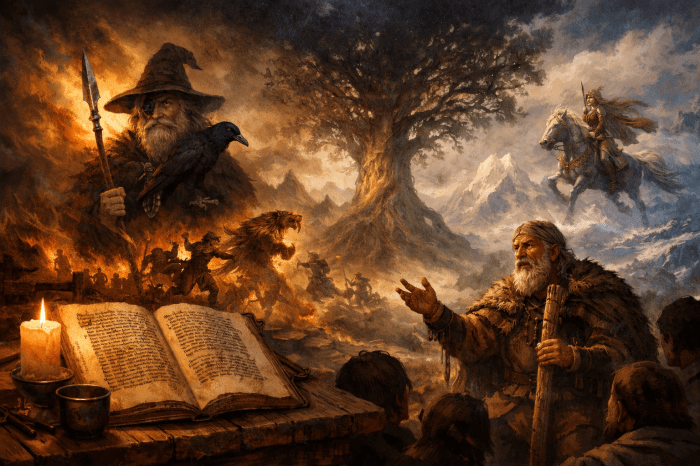
Exploring the core source texts of Norse myth—and how scholars interpret them The fire is low. The hall is loud. Someone begins to speak—not to explain the world, but to remember it. That is where the Poetic Edda belongs: not on a lectern, not in a church, but in the space between memory and breath. … Continue reading The Poetic Edda: Saga, Song & Truth

Snorri Sturluson and the Silence of Lost Gods

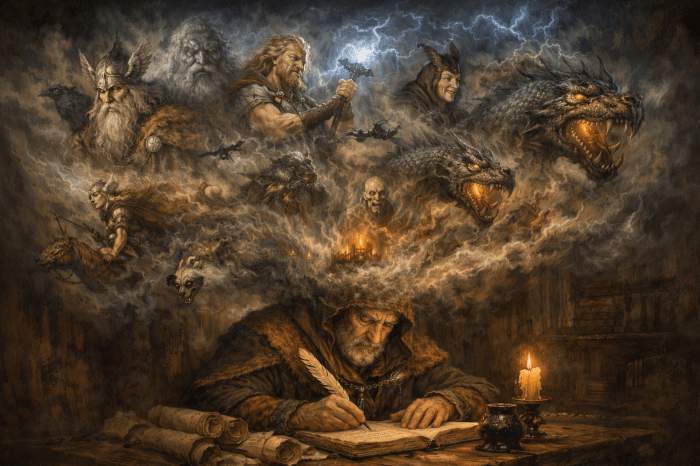
How Norse Myth Survived by Accident—and What Was Lost Forever By D.W. Roach When modern readers think of Norse mythology, they often imagine a well-defined canon: Odin, Thor, Loki, Ragnarök—stories as fixed and authoritative as the Greek epics or the Bible itself. But this sense of completeness is an illusion. In truth, most of what … Continue reading Snorri Sturluson and the Silence of Lost Gods

Valhalla Is Not Heaven: A Norse Afterlife Reconsidered

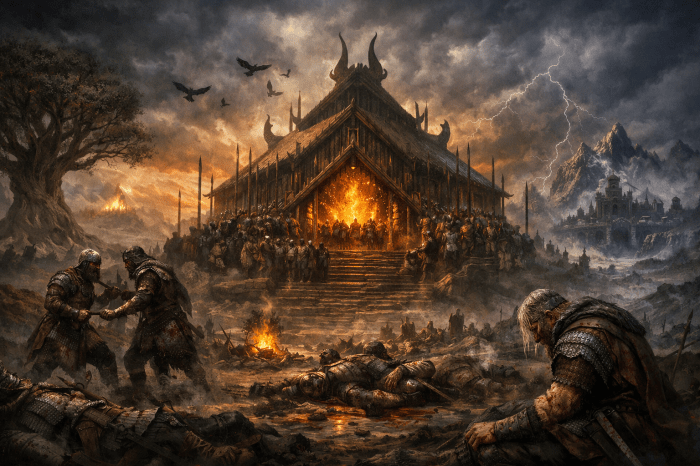
By D.W. Roach | marauderbooks.com When modern readers hear Valhalla, they often imagine a warrior’s heaven: endless feasts, eternal glory, and a reward for valor. It’s a comfortable image—clean, triumphant, and reassuring. But that vision owes far more to modern romanticism than to the Norse worldview that gave Valhalla its name. Valhalla is not heaven. … Continue reading Valhalla Is Not Heaven: A Norse Afterlife Reconsidered

Blood and Bond: Viking Families and the Power of Kinship

By D.W. Roach In the Viking world, power did not come from a crown, a parliament, or even an army. It came from blood. Family — not state — was the nucleus of Norse society, the true engine that drove politics, trade, and war. To be born into a large and respected family was to … Continue reading Blood and Bond: Viking Families and the Power of Kinship

The Nøkken: The Lure Beneath the Water

By D.W. Roach The Silver in the Still Pond The forest was silent but for the crunch of boots over frost-hardened soil. The three Vikings moved cautiously through the pines, their breath misting in the pale light of dawn. They had raided all day and found little—no silver, no livestock, not even a frightened farmer … Continue reading The Nøkken: The Lure Beneath the Water

Modern Paganism and Asatru: Faith, Heritage, and Why You’re Probably Not a Viking

By D.W. Roach If you’ve ever wandered into a renaissance fair, a pagan festival, or even a lively corner of the internet, you may have run across folks proudly calling themselves Asatru. Horns of mead may be raised, runes may be carved, and occasionally someone shows up in a horned helmet (spoiler: those aren’t historically … Continue reading Modern Paganism and Asatru: Faith, Heritage, and Why You’re Probably Not a Viking

The Frost-Giant’s Daughter — Robert E. Howard’s Norse-Infused Vision

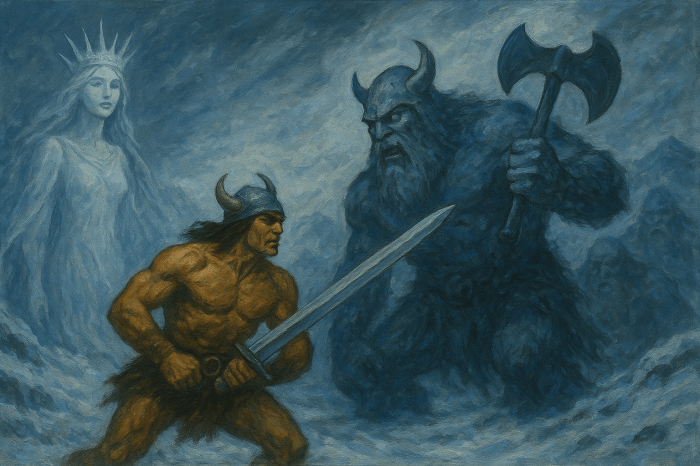
By D.W. Roach Robert E. Howard’s Conan the Cimmerian is a literary creation steeped in the raw power of myth and legend. While Howard pulled from many cultures to craft Conan’s Hyborian Age, few stories wear their Norse influence as proudly as The Frost-Giant’s Daughter. First published in 1953 (posthumously), the tale is a fever … Continue reading The Frost-Giant’s Daughter — Robert E. Howard’s Norse-Infused Vision

The Lord of the Rings and the Echoes of Norse Myth: How Viking Lore Shaped Tolkien’s World

By D.W. Roach Few works of modern fantasy have captured the imagination as profoundly as J.R.R. Tolkien’s The Lord of the Rings. Yet behind the hobbits, elves, and dark lords lies a deep well of mythological inspiration—chief among them, the rich tapestry of Norse and Viking culture. Tolkien, a philologist and scholar of ancient languages, … Continue reading The Lord of the Rings and the Echoes of Norse Myth: How Viking Lore Shaped Tolkien’s World